






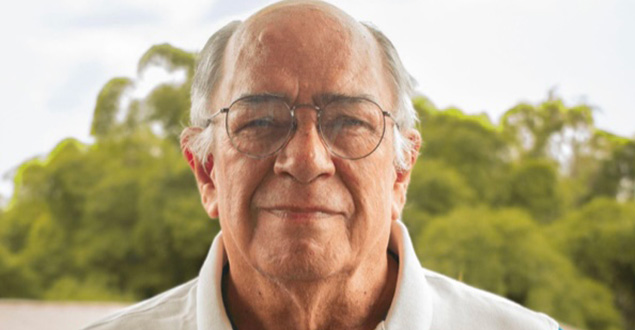
Between the tranquility of the Jesuit community and the dusty streets of Monte Sinaí in Guayaquil, Father Eduardo Vega S.J., walks daily between two realities. On one side, prayer and fraternal life; on the other, a territory marked by poverty and social vulnerability. There, leading Hogar de Cristo Ecuador, he accompanies families seeking to rebuild their lives and their dignity. His daily presence sustains the hope of communities trying to start anew.
THE SAME FAITH
The strength that sustains his mission is neither recent nor circumstantial. It was forged in the 1960s, when he was still a student in Bogotá and had to complete literacy hours in a peripheral neighborhood where families were building their own homes. That experience profoundly shaped his vocation.
“What did my colleagues and I do? What a construction apprentice does: dig trenches for foundations, mix mortar, carry bricks. That was our literacy: to serve.”
During the novitiate, the conclusions of the Medellín Conference (1968) broadened that initial intuition and gave it a clear horizon in the midst of a Latin America marked by profound inequalities.
“These readings opened my eyes and heart to the injustices, the institutionalized violence, and the suffering of many of our brothers and sisters in this convulsed Latin America.”
From then on, his path was clear:
“Today I can say with certainty that I came to the world of the poor through the Gospel and the social teachings of the Church.”
Those experiences sealed a vocation that, over the years, would inseparably unite faith, service, and life alongside the poorest.
FROM BOGOTA TO HOME
Decades later, that same conviction would lead him to Ecuador. In July 2009, the Provincials of Colombia and Ecuador invited him to learn about the Hogar de Cristo housing project in Guayaquil. He remembers that meeting as a kind of "lock-in." He traveled there in August, toured the facilities, and spent time with the families. "I felt the presence of God inviting me to continue serving his chosen ones in this magnificent work."
He finally arrived on October 4th of that year, during the feast of Saint Francis of Assisi and, as he himself says, "I came to stay."
The work he was undertaking already had a long and distinguished history on the continent. Hogar de Cristo Ecuador had been founded in 1971, driven by the Jesuits Francisco García Jiménez S.J. (Uncle Paco) and Josse Van der Rest S.J., inspired by the work begun by Father Alberto Hurtado S.J. in Chile. From the outset, the response was concrete and urgent: to provide emergency housing to families without shelter or protection.
Over time, the mission expanded, but its core remained intact: to walk alongside those living in the greatest exclusion and to accompany them on their journey toward dignity. Father Vega summarizes it this way: “There has always been an awareness that a decent house is the foundation for building a home, built on respect, dignity, and a good life.”
In neighborhoods where many families are headed by single women, this change takes on a concrete form. “It is she who, by having a house, even if it is an emergency dwelling made of wood and cane, begins to live the dream of having a home, seeing her children play, feel protected, and free.”
Housing doesn't immediately solve all the difficulties. It does, however, open up a space where hope can take root and where daily life begins, little by little, to transform.
RESILIENCE AS A PATH
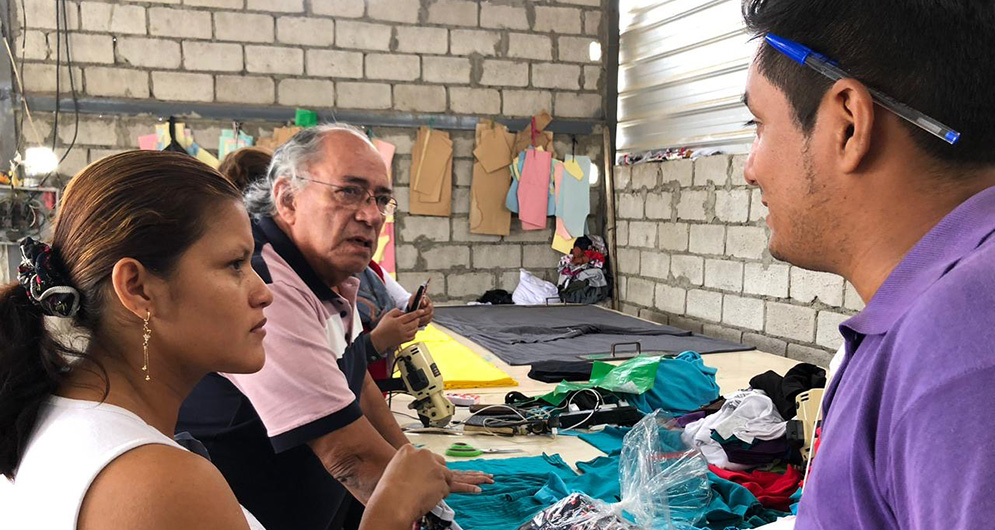
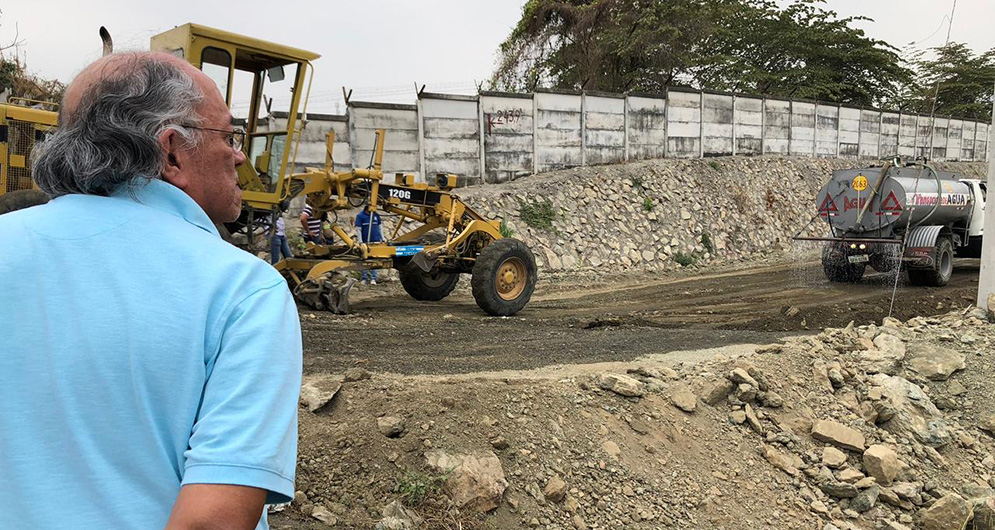
Today, at the helm of Hogar de Cristo Ecuador, Father Vega accompanies communities living through difficult times. He describes the situation with stark realism: “The communities are practically confined, trapped by fear and extortion...”
Their response, however, comes from elsewhere. “To resist and maintain hope, and to spread that hope to the communities.”
Each house built becomes a concrete gesture of affirmation of life. The work is not limited to handing over a house; it also involves what he calls "social construction of the territory": accompanying community processes where trust has weakened and networks have fragmented.
It's a patient path. "Slowly, because it's not easy and processes can't be accelerated, especially with the presence of armed groups", he explains.
In the midst of that reality, what sustains their work is a spirituality that is expressed in closeness, constancy and daily service.
JOSSE'S FOOTPRINT
Upon assuming his new role, Father Vega traveled to Chile to meet Josse van der Rest S.J., founder of SELAVIP and co-founder of Hogar de Cristo Ecuador. That visit was, above all, a formative experience. “He dedicated long periods of time to teaching us about his apostolate and shared with us profound insights into his thinking and vision of service to the poor and abandoned.”
Years later, he visited him again in Santiago, at the Ignatian residence, when he was in his final days. That second visit had a different, more subdued tone. For Father Vega, Josse embodied a radical way of living the Gospel:
“Following the example of Jesus, he shouldered the pain and suffering of many men and women in Latin America, Asia, and Africa.”
Today, amidst the challenges facing the work, that memory sustains the continuity of the mission. It recognizes in it a spiritual heritage that precedes it and that sustains the mission beyond individuals.
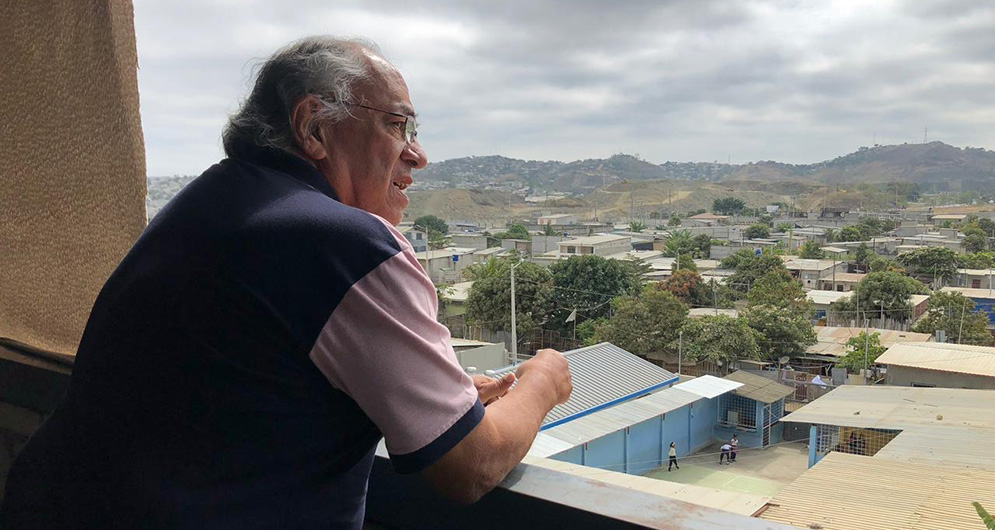
LIVE, LOVE, AND SERVE
When asked what she would say to those who believe that poverty is an impossible problem to change, her answer is direct: “Believe, dream, and hope. Nothing is impossible for God. Never lose hope.”
These are words born from decades of service, first in Colombia and then in Ecuador. The same faith that led him to carry bricks in his youth and that today is expressed in a constant presence alongside communities seeking to rebuild their lives.
In the midst of inequality, their work takes shape in simple and persistent gestures: a house that becomes a home, a community that regains confidence, a life that is once again projected towards the future.
Shaped by the spirituality that marked his path and by the legacy he received, he continues to walk alongside the poorest, convinced that hope is built day by day and can transform violence into paths of life. Guided by the Ignatian maxim that orients his existence, he remains dedicated, in all things, to love and serve.
 Spanish